Binghamton University uses Collaboratory to turn engagement data into insights that inspire collaboration, inform decisions, and advance priorities.
Across higher education, the message is clear: data alone won’t drive change, shared understanding will. With Collaboratory, institutions can translate engagement data into accessible, relevant, and actionable insights, transforming information into a strategic asset that deepens collaboration, informs decision-making, and highlights the collective impact of their work in community. When campuses move beyond data collection to intentional communication and storytelling, engagement shifts from a series of isolated activities to a defining institutional strength.
Binghamton University offers a powerful example of this approach in action. Through their annual Community Engagement Report, the university demonstrates how Collaboratory data sharing can turn information into insight, and insight into institutional progress.
Key Principles of Institutional Reporting
 Accessibility
Reports should be easy to find, read, and understand. Centralized dashboards, infographics, or web-based summaries make complex data approachable.
 Relevance
Tailor data for each audience. Senior leaders may want to know how engagement aligns with campus KPIs, while faculty may care more about collaboration patterns or student outcomes.
 Contextualization
Pair data with trends, benchmarks, and explanations. Numbers gain meaning when connected to examples, peer comparisons, or community priorities.
 Actionability
Data must inform next steps. Frame reports around decision-making and communication needs, not just compliance. Every report should invite interpretation.
Strategies for Effective Reporting
-
Segment and Tailor Reports: Different audiences need different levels of detail. Leadership summaries, faculty highlights, and public-facing dashboards can all emerge from the same dataset when filtered thoughtfully. Curate the most relevant highlights; more is not always better.
-
Connect to Institutional and Community Priorities: Frame reports around the goals that matter most to your campus and communities (e.g., strategic plans, regional priorities), ensuring engagement data reinforces, rather than competes with, broader narratives. Embed reporting within existing structures and processes such as annual planning, strategic goal updates, and accreditation.
-
Align Collaboratory Data with Broader Datasets and Existing Efforts: Integrate engagement insights with other institutional data such as student success measures or faculty workload, or with public indicators like the UN Sustainable Development Goals or local quality-of-life metrics.
-
Tell Stories with Data: Combine quantitative metrics with qualitative stories. Pair a statistic on service-learning courses with a faculty spotlight or community partner testimonial to bring numbers to life.
From Data to Action at Binghamton University
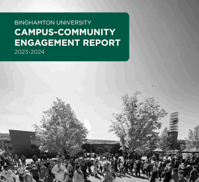 Binghamton University’s annual Community Engagement Report offers a strong example of this framework in practice. Developed by the Center for Civic Engagement, the report translates Collaboratory data into an accessible, narrative-rich summary that highlights how community-engaged learning, research, and partnerships advance the university’s mission, vision, and strategic plan.
By combining metrics – such as over 1,600 students enrolled in community-engaged learning courses and 7,000 students participating in co-curricular service – with stories of projects like Hidden Heroes and Language Chef, the report helps stakeholders see the tangible outcomes of engagement. Importantly, it positions engageme
nt data not as an end product, but as a shared tool for institutional reflection, celebration, and planning.
By thoughtfully presenting their engagement insights, Binghamton University has turned data into a tool for reflection, alignment, and action. Their efforts demonstrate how strategic data sharing can deepen understanding, inspire collaboration, and advance institutional priorities.